Buy Clomid for SARM PCT in Thailand
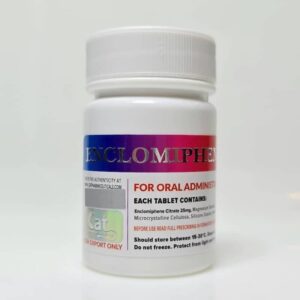
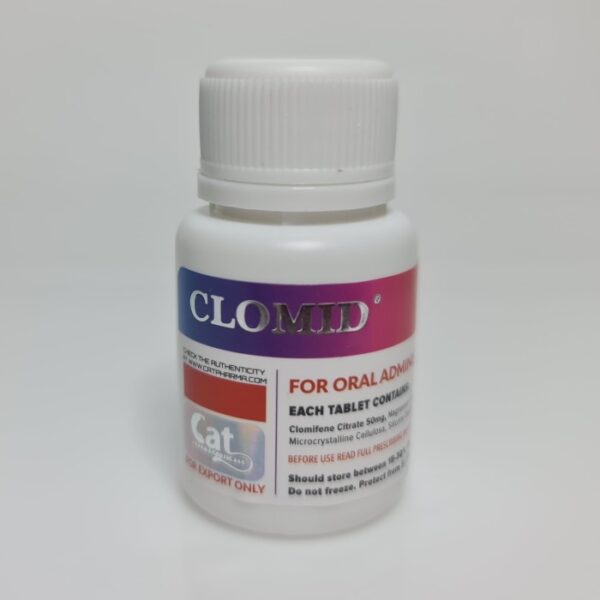
Clomid comes in a bottle of 50 tablets, with each tablet containing 50 mg of clomiphene citrate. It is one of the most established options customers consider when planning post-cycle support after SARMs.
This product contains clomiphene citrate and is sold under the familiar Clomid name. The content on this page is focused specifically on SARM PCT and recovery following a SARM cycle.
Clomid Product Specifications
| Product | Clomid / Clomiphene Citrate |
|---|---|
| Strength | 50 mg per tablet |
| Quantity | 50 tablets |
| Format | Oral tablets |
| Product class | Selective estrogen receptor modulator |
| Primary site category | SARM PCT and post-cycle support |
What Is Clomid?
Clomid is the familiar market name for clomiphene citrate, an oral selective estrogen receptor modulator commonly abbreviated as a SERM.
Clomiphene citrate contains two related isomers: enclomiphene and zuclomiphene. These components interact differently with estrogen-receptor signalling and distinguish standard Clomid from a product containing enclomiphene alone.
Why Clomid Is Used for SARM PCT
Some SARMs can reduce the hormonal signals responsible for maintaining natural testosterone production. The degree of suppression can vary according to the SARM used, cycle length, exposure and individual response.
Clomid is commonly associated with SARM PCT because clomiphene can influence signalling between the hypothalamus, pituitary gland and testes. This can increase luteinizing hormone and follicle-stimulating hormone, which are involved in endogenous testosterone production and reproductive function.
Clomid is particularly relevant to customers researching post-cycle support after suppressive SARMs such as LGD-4033 Ligandrol, RAD-140 Testolone and Ostarine MK-2866.
Clomiphene and Natural Testosterone Production
Clomiphene does not provide testosterone directly. Instead, it affects estrogenic feedback within the hormonal signalling pathway that controls the release of LH and FSH.
In male hormone research, clomiphene has been studied for its ability to increase endogenous testosterone while maintaining the signalling involved in sperm production. This mechanism is the primary reason Clomid receives attention within SARM post-cycle discussions.
Human Clomiphene Research
A prospective study involving men with low testosterone reported a substantial increase in average testosterone levels after clomiphene treatment, together with an improvement in the testosterone-to-estradiol ratio.
Additional clinical research and longer-term observational studies have reported increased testosterone levels and improvement in hormone-related symptoms among many participants using clomiphene under medical supervision.
These studies examined men with diagnosed hormone-related conditions rather than controlled SARM PCT protocols. They support the compound’s effects on hormonal signalling but do not establish one universal post-cycle plan for every SARM user.
Clomid Compared With Enclomiphene
Clomid and Enclomiphene are closely related but are not identical products. Clomid contains both enclomiphene and zuclomiphene, while Enclomiphene contains only the trans-isomer.
Clomid is the more familiar traditional option, while some customers prefer the more targeted isomer profile of Enclomiphene 25 mg for SARM PCT.
Keeping these as separate products allows customers to compare their composition rather than treating the names as interchangeable.
Planning PCT After a SARM Cycle
Post-cycle requirements can differ substantially between SARM users. The compound used, cycle duration, amount used, previous exposure and individual hormone levels can all influence recovery.
Blood testing provides more useful information than relying only on symptoms or copying a generic online plan. Commonly reviewed markers include total testosterone, free testosterone, luteinizing hormone, follicle-stimulating hormone and estradiol.
Is Clomid a SARM?
No. Clomid is a selective estrogen receptor modulator. It appears in the SARM PCT category because it is commonly used for post-cycle support after SARMs, not because it belongs to the SARM compound class.
Clomid and Tested Sport
Clomiphene is prohibited under the World Anti-Doping Agency Prohibited List. Athletes subject to anti-doping testing should avoid exposure to Clomid.
Frequently Asked Questions
How much Clomid is included?
Each bottle contains 50 tablets, with 50 mg of clomiphene citrate in each tablet.
Is Clomid the same as Enclomiphene?
No. Clomid contains both enclomiphene and zuclomiphene. Enclomiphene products contain the trans-isomer without the zuclomiphene component.
Why is Clomid associated with SARM PCT?
Clomid is associated with SARM PCT because clomiphene can increase LH and FSH signalling involved in the body’s natural testosterone production.
Does every SARM cycle require Clomid?
No single post-cycle approach is appropriate for every SARM cycle. The need for support depends on the compound used, individual response and relevant hormone-test results.
Independent Information Sources
- Clomiphene citrate prescribing information and composition
- Human study of clomiphene and endogenous testosterone
- Long-term clomiphene research in men
- AUA and ASRM information about SERMs, LH and FSH
- World Anti-Doping Agency Prohibited List
This page provides general information about Clomid and SARM-related post-cycle support. Clomiphene has not been clinically approved specifically as a SARM PCT treatment, and individual results are not guaranteed.